Wondering if Lost Creek could be the right next step after your current home? If you want more space, a more established setting, and a West Austin address with a distinct identity, Lost Creek often enters the conversation for good reason. This guide will help you understand what makes the neighborhood different, who it tends to fit best, and what to pay attention to before you buy. Let’s dive in.
What Lost Creek Feels Like
Lost Creek is a west-side Austin enclave in Travis County, just north of Barton Creek. The neighborhood includes roughly 1,200 homes and began development in the 1970s, which gives it a more established feel than many newer communities in the broader Austin area.
That history shows up in the land itself. Lost Creek was carved from former ranchland, and its hills, knolls, and curving streets reflect the natural Hill Country terrain rather than a flat, more uniform suburban layout. If you are drawn to neighborhoods with mature surroundings and a less cookie-cutter look, that matters.
Why Lost Creek Stands Out
One of the biggest differences in Lost Creek is that it is not simply another standard city neighborhood. As of September 10, 2024, Lost Creek is again outside the City of Austin following a resident vote for disannexation and City Council approval.
In practical terms, that means the neighborhood has its own limited district and service structure. For buyers, that can translate into a more local approach to managing shared spaces, neighborhood features, and certain community priorities.
A Locally Managed Community
The Lost Creek Limited District helps fund and maintain several shared neighborhood assets. These include Lost Creek Boulevard Park, Boulder Trail Park, the district office and community center, the 360 entrance and medians, the Whitemarsh Valley Nature Trail, and the district greenbelt at Barton Creek.
The district also funds security patrols at the Barton Creek greenbelt trail. That resident-run structure is part of what gives Lost Creek a more hands-on, community-managed identity.
Stewardship Is Part of the Character
Lost Creek is identified by the district as a Firewise USA community and an International Dark Skies Development of Distinction. Those designations reflect an emphasis on wildfire preparedness, landscape stewardship, and reduced light pollution.
For some buyers, those details may seem small at first. In reality, they can shape the day-to-day feel of a neighborhood and signal a community that pays attention to how its environment is maintained.
What Move-Up Buyers Usually Like
If you are considering a move-up purchase, Lost Creek tends to appeal for a specific mix of reasons. It offers a more residential, less urban profile while keeping you in the West Austin orbit.
That combination can be especially attractive if you are looking for a custom-home setting, mature trees, and access to outdoor space without moving too far from central Austin activity. It is less about brand-new uniformity and more about location, land, and neighborhood identity.
Custom Homes Over Tract Homes
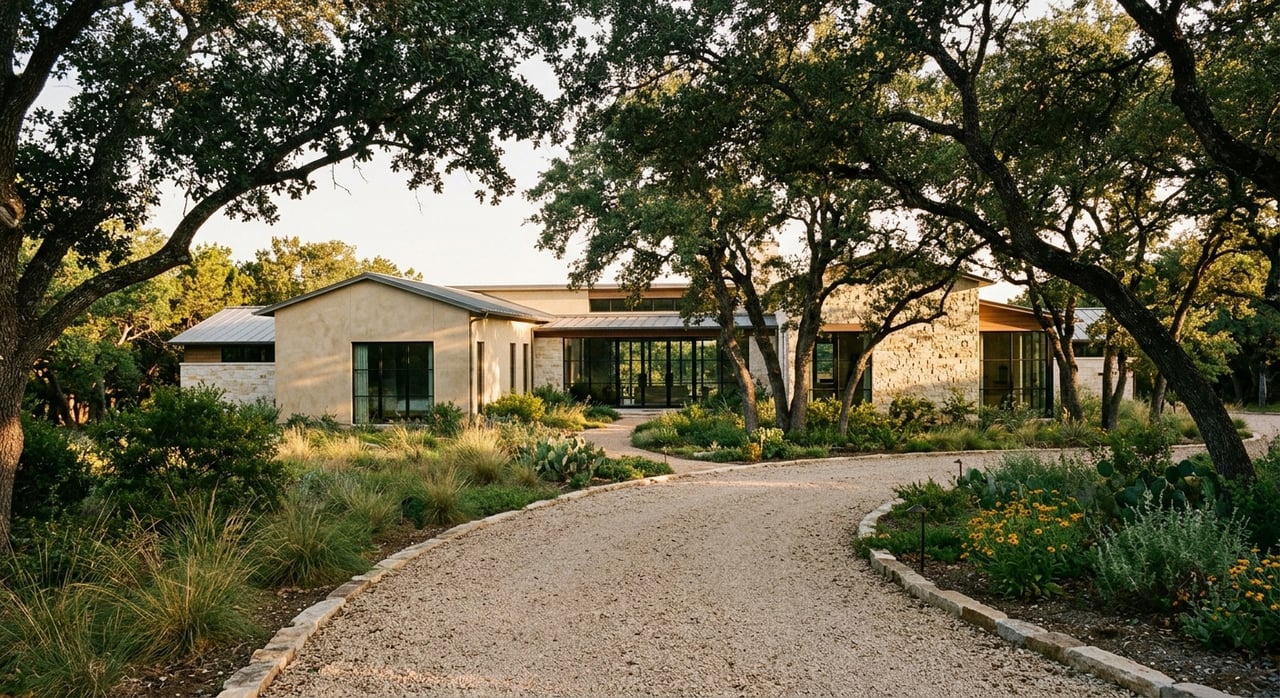
Lost Creek is best understood as a custom-home enclave rather than a standardized tract neighborhood. Because development began in the 1970s and followed the contours of the land, the housing stock tends to feel more site-specific and more varied in architecture.
That can be a major plus if you value individuality and a sense that homes were designed for their lots. It can also mean more variation from one property to the next in layout, style, updates, and condition.
Established Setting and Mature Landscape
Many move-up buyers are not only upgrading square footage. They are also upgrading the feel of where they live.
In Lost Creek, the established streetscape, mature green space, and Hill Country topography are a big part of the appeal. If your goal is to move into a neighborhood that feels rooted rather than recently assembled, Lost Creek checks that box.
Outdoor Access in Lost Creek
Outdoor lifestyle is part of the Lost Creek story, but it helps to understand what that really means. Some of the green-space access in and around the neighborhood is district-managed and neighborhood-controlled, while the public Barton Creek Greenbelt is a separate city park network.
That distinction matters because buyers sometimes assume all nearby trail access works the same way. In Lost Creek, neighborhood open space and public greenbelt access are related to the area’s appeal, but they are not interchangeable.
Neighborhood Parks and Trails
The Lost Creek Limited District maintains several community spaces, including parks, medians, a nature trail, and greenbelt areas. These features support an active, outdoors-oriented lifestyle within the neighborhood itself.
For buyers who want nearby places to walk, spend time outside, or enjoy a more scenic setting, that local system adds meaningful value to daily life.
Barton Creek Greenbelt Nearby
Austin Parks and Recreation describes the Barton Creek Greenbelt as offering more than 12 miles of trails, swimming holes, biking, and rugged limestone terrain. It is a well-known outdoor resource in the area.
Still, it is important to keep the distinction clear. The public greenbelt is not the same as the private land and district-managed open-space areas associated with Lost Creek.
Club Lifestyle and Convenience
For buyers who value club amenities, Westlake Country Club is a major part of the neighborhood ecosystem. Located on Lost Creek Boulevard, the private club offers golf, pools, tennis and pickleball, fitness, dining, and social programming.
The club, formerly known as Lost Creek Country Club, has also undergone a multimillion-dollar renovation. If you are looking for a neighborhood where club access can be part of your lifestyle equation, that is a meaningful point in Lost Creek’s favor.
School Context to Know
Lost Creek is associated with Eanes ISD, which serves approximately 7,700 students across nine schools. The neighborhood is commonly linked with Forest Trail Elementary, West Ridge Middle, and Westlake High.
That said, school zoning is address-based and should always be verified by address. If schools are part of your home search criteria, it is smart to confirm a specific property through the appropriate district and appraisal district tools before making assumptions.
Potential Tradeoffs to Consider
Every neighborhood has a fit profile, and Lost Creek is no exception. The same qualities that draw buyers in can also create considerations worth weighing carefully.
Because the housing stock is older and custom in nature, homes can vary significantly in updates, systems, floor plans, and lot conditions. If you want a turnkey experience, you may need to be selective. If you appreciate character and location more than sameness, that tradeoff may feel worth it.
The local governance structure is also distinct. Some buyers will see the limited district model as a positive because of its stewardship and local control, while others may simply want to better understand how services and neighborhood management work before moving forward.
Is Lost Creek the Right Move-Up Fit?
Lost Creek is a strong move-up candidate if you want a West Austin location with custom homes, mature surroundings, neighborhood-managed open space, and access to club amenities. It tends to suit buyers who prefer an established, more residential setting over a newer, more standardized suburban environment.
It may be especially appealing if you care about lot character, architectural variation, and the feel of a neighborhood that has grown into its landscape over time. At the same time, it helps to go in with clear expectations about older housing stock, address-based school verification, and the area’s unique service structure.
If you are weighing Lost Creek against other West Austin options, the real question is not whether it is objectively better. It is whether its mix of setting, housing style, governance, and lifestyle aligns with the way you want to live.
If you want help comparing Lost Creek to other West Austin neighborhoods or evaluating whether a specific home fits your goals, Kurb Group can help you think through the details with a clear, strategic lens.
FAQs
Is Lost Creek in the City of Austin?
- As of September 10, 2024, Lost Creek is outside the City of Austin after a resident vote for disannexation and City Council approval.
What kind of homes are common in Lost Creek?
- Lost Creek is known for custom homes that began development in the 1970s, so the housing stock is typically more varied and site-specific than in standardized tract neighborhoods.
Does Lost Creek have access to Barton Creek trails?
- Lost Creek has its own district-managed parks, trails, and green-space areas, while the public Barton Creek Greenbelt is a separate city park network.
Is Lost Creek a good move-up neighborhood in West Austin?
- Lost Creek can be a strong fit if you want an established West Austin setting with custom homes, mature landscape, neighborhood amenities, and a more residential feel.
Which schools serve Lost Creek homes?
- Lost Creek is associated with Eanes ISD, but school assignments are address-based, so you should verify the exact campus for any specific home.
What amenities are near Lost Creek for residents?
- Lost Creek includes district-maintained parks and trails, and Westlake Country Club offers private amenities such as golf, pools, tennis, pickleball, fitness, dining, and social programming.