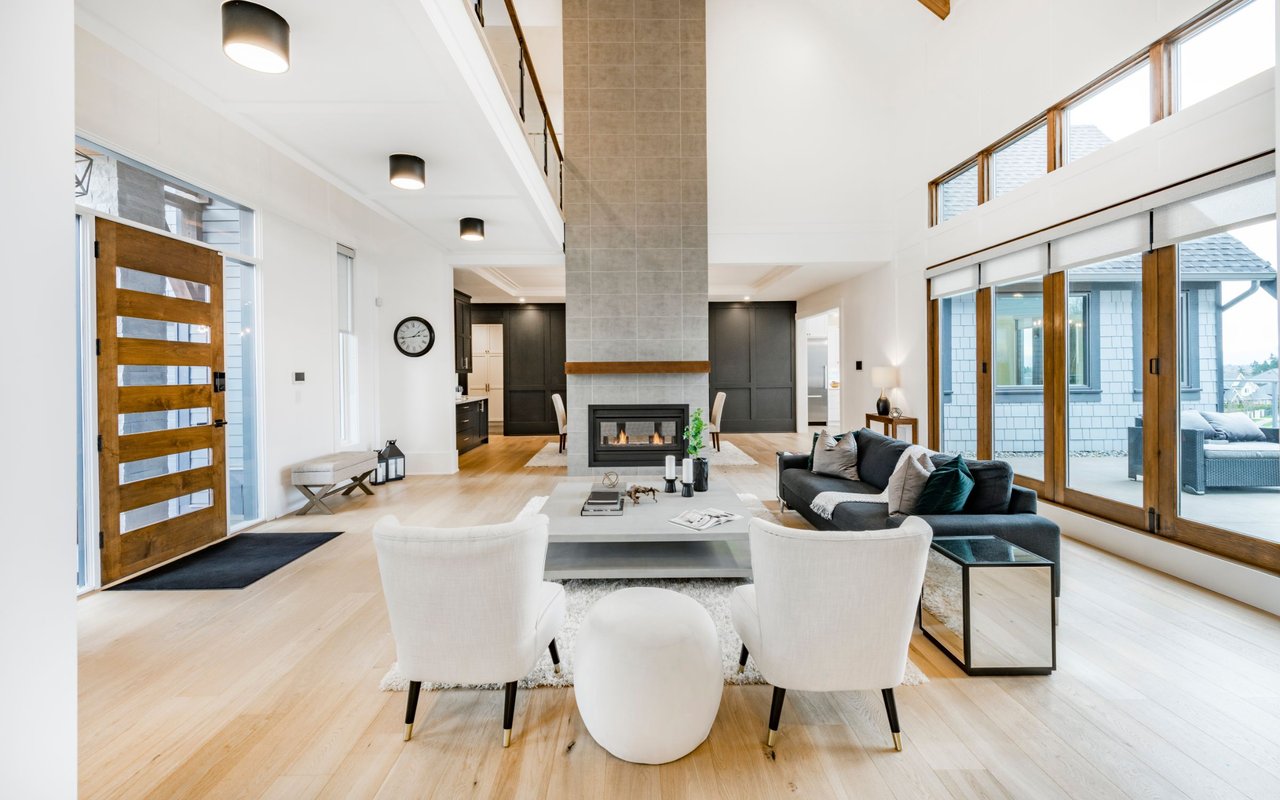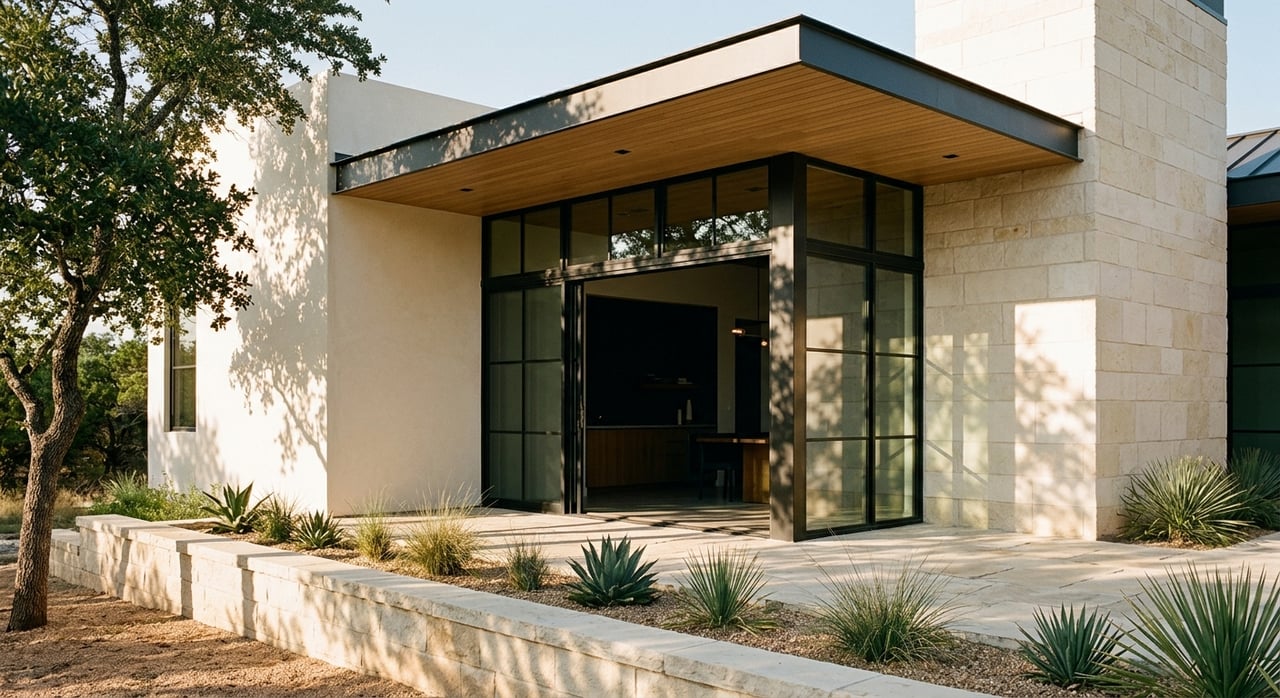
If you have ever looked at an Austin-area listing and thought, This says Hill Country modern, but what does that actually mean? you are not alone. For design-conscious buyers and sellers, the phrase gets used often, yet the best homes in this style have a lot more going on than limestone walls and dark window frames. Understanding the difference can help you spot real architectural value, evaluate a property more clearly, and market a home with more precision. Let’s dive in.
What Hill Country modern really means
Hill Country modern is best understood as a regional architectural language, not a strict formula. In the Texas Hill Country, that language is shaped by the area’s plateau landscape, the Balcones Escarpment, and a climate that shifts between humid and semiarid conditions.
That regional context matters because the style is about more than surface-level finishes. A true Hill Country modern home usually reflects the land itself through its siting, rooflines, materials, and relationship to light, trees, wind, and views.
Fredericksburg’s design guidelines describe Hill Country Modern as a residential style tied to locally available materials, passive climate-control features, modern structural systems, limestone masonry, unpainted wood, large windows, low-sloped gable or shed roofs, standing-seam metal roofing, and minimal ornament. In other words, the whole composition should feel connected and intentional.
Why the style fits Austin and the Hill Country
In and around Austin, this style feels natural because the region itself provides the palette. The Hill Country and Edwards Plateau are shaped by limestone, sandstone, shale, and dolomite, and the area has long been defined by oak-dominated landscapes and dense juniper breaks.
That helps explain why limestone, wood, steel, and glass feel so at home here. Stone gives the architecture weight and permanence, while wood softens it, steel sharpens it, and glass opens it to the landscape.
There is also a historical thread beneath the modern expression. Limestone and sandstone buildings have long been common in the Hill Country, so even contemporary homes with clean lines and large spans can still echo the region’s older building traditions.
Key features of Hill Country modern homes
When you are touring homes or reviewing listings, it helps to know what usually signals an authentic Hill Country modern design.
Low, simple rooflines
Many strong examples use low-sloped gable or shed roofs rather than tall, highly decorative roof forms. These profiles tend to feel more horizontal and more grounded on the site.
Standing-seam metal roofs are also common. They reinforce the clean, restrained look while fitting the region’s practical building vocabulary.
Honest, regional materials
Limestone is often the anchor material in Hill Country modern homes. You may also see wood, steel, stucco, brick, or fiber-cement used in a supporting role, but the best homes keep the palette cohesive.
The key is that materials should feel structural and natural, not decorative or pasted on. That is part of what gives the architecture its calm, lasting quality.
Large windows and strong light
Glass plays a major role in this style. Large windows, clerestories, and carefully framed openings help connect interior spaces to trees, views, and courtyards.
In a well-designed home, the glass is not there just for drama. It also works with orientation, shade, and privacy to make the home feel bright without feeling exposed.
Minimal ornament
Hill Country modern homes usually avoid extra trim and fussy detailing. The visual interest comes from the massing, the materials, and the way the house meets the land.
That restraint is part of the appeal. It lets the site, the textures, and the proportions do the talking.
How the best homes sit on the land
One of the clearest signs of a strong Hill Country modern home is how it responds to topography. Instead of forcing a large box onto a site, the design often follows the slope, preserves open space, and breaks the structure into lower, more manageable volumes.
This is especially relevant in the Austin area, where many homesites have grade changes, mature trees, and privacy concerns. In the strongest examples highlighted by AIA Austin, the architecture works with those conditions rather than trying to erase them.
A sloped homesite might lead to a floating roofline, a stepped plan, or a room tucked into the hillside. A tree-filled lot may shape where volumes sit, how views open up, and where outdoor living spaces land.
Fredericksburg’s guidelines also stress that attached garages should not dominate the front elevation. That is an important detail for buyers and sellers alike because it reinforces the idea that the home’s architecture, not its parking, should define the first impression.
Indoor-outdoor living is part of the design
In Hill Country modern homes, outdoor space is not an afterthought. It is often designed as a true extension of the interior.
Across Austin examples, recurring features include open-plan living spaces, courtyards, screened porches, back terraces, rooftop decks, fireplaces, and outdoor rooms that can be used through much of the year. Deep soffits and shaded transitions help blur the line between inside and out.
That approach makes sense in the local climate. The Hill Country sees highly variable precipitation, and Austin Camp Mabry’s climate normals show a 0.6°F increase in average annual temperature and 11.7 more days with highs at or above 90°F when comparing 1981 to 2010 with 1991 to 2020.
Those conditions make shade, overhangs, screens, and durable materials practical choices, not just visual ones. More heavy-rain days also make grading and drainage awareness especially important on sloped sites.
Hill Country modern vs farmhouse modern
These two styles are sometimes grouped together, but they are not the same. Fredericksburg’s guidelines treat them as separate compatible styles, and that distinction is helpful when you are comparing listings.
Hill Country modern tends to lean into limestone, structural clarity, low-sloped roofs, and a more site-driven composition. Farmhouse modern more often leans toward wood or fiber-cement siding and cross-gabled forms.
The overlap can be subtle, especially in newer construction. Still, if the home feels more rooted in stone, topography, and restrained horizontal massing, it is more likely to read as Hill Country modern.
What buyers should notice in listings and tours
If you are shopping for a Hill Country modern home in the Austin area, a few details can help you tell whether the design is truly thoughtful.
Look beyond the finish palette
Limestone and black-framed windows alone do not make a home Hill Country modern. Ask whether the design feels integrated from the ground up.
Does the roofline suit the site? Do the materials feel consistent? Does the architecture seem shaped by the landscape, or just styled to photograph well?
Study the site fit
Pay attention to whether the house sits naturally on the lot. On a hillside or uneven parcel, the strongest homes often step with the grade rather than flatten everything into submission.
This can affect privacy, drainage, outdoor usability, and the overall feel of the property. Site fit is one of the biggest differences between a design-led home and a more generic one.
Evaluate the outdoor rooms
A great Hill Country modern home usually treats outdoor living as everyday living. Screened porches, terraces, courtyards, and shaded lounges should feel truly usable, not symbolic.
Look at orientation, shade, wind exposure, and access from the main living areas. The best spaces feel connected, protected, and easy to enjoy.
Notice garage placement and street presence
Street-facing design tells you a lot. If the garage dominates the facade, the house may feel less refined and less aligned with the style’s architectural priorities.
In stronger examples, the entry sequence, courtyard, massing, and material composition create the first impression instead. That usually leads to a more elevated exterior presence.
What sellers should understand before marketing one
If you own a Hill Country modern or contemporary Hill Country home, presentation matters. Buyers for this type of property are often paying attention to proportion, siting, materials, and spatial flow, not just bedroom count and square footage.
That means your marketing should explain what makes the home architecturally credible. If the property preserves trees, responds to a slope, uses a restrained material palette, or creates meaningful indoor-outdoor living, those details deserve clear positioning.
It also helps to avoid generic labels. Calling every limestone-and-glass home Hill Country modern can blur what makes a distinctive property special. A more precise story often leads to stronger buyer understanding and better overall positioning.
Why this style continues to resonate
Hill Country modern remains appealing because it balances warmth and clarity. It can feel contemporary without feeling cold, and regional without feeling overly rustic.
For many Austin-area buyers, especially those drawn to custom homes, modern architecture, and land-conscious design, it offers a way to live with the landscape rather than apart from it. That combination gives the style staying power.
If you are buying, selling, or exploring a custom-build path in the Austin Hill Country, having a sharper read on architecture can make every decision easier. To talk through design-forward homes, homesites, or how to position a distinctive property, connect with Kurb Group.
FAQs
What does Hill Country modern mean in Austin-area real estate?
- It refers to a regional architectural approach shaped by the Hill Country landscape, local materials, climate response, simple rooflines, large windows, and a design that fits the land.
What materials are common in Hill Country modern homes?
- Limestone is often the primary material, with wood, steel, glass, stucco, brick, or fiber-cement used to support a cohesive, natural-looking design.
What rooflines are typical in Hill Country modern architecture?
- Low-sloped gable and shed roofs are common, often paired with standing-seam metal roofing and minimal ornament.
How is Hill Country modern different from farmhouse modern?
- Hill Country modern usually emphasizes limestone, low horizontal forms, and site-responsive design, while farmhouse modern more often uses wood or fiber-cement siding and cross-gabled forms.
What should buyers look for in a Hill Country modern listing?
- Pay attention to how the home sits on the site, whether the garage recedes, how usable the outdoor rooms are, and whether the materials and massing feel integrated rather than decorative.
Why does indoor-outdoor living matter in Hill Country modern homes?
- It is a core part of the style and also a practical response to the Austin-area climate, where shade, screened spaces, overhangs, and durable materials can improve comfort and year-round use.