If you care about architecture, Tarrytown rewards a slower look. This central Austin neighborhood is not just a collection of attractive homes. It is a layered residential landscape shaped by early suburban planning, mature trees, historic estates, and newer design that often has to respond carefully to the site. If you want to understand what makes Tarrytown visually distinct, this guide will help you read the neighborhood with a more informed eye. Let’s dive in.
Why Tarrytown Stands Out
Tarrytown sits just west of UT and downtown, between Lake Austin and MoPac, which helps explain why it feels both close-in and established. The Tarrytown Alliance describes it as a place shaped by old, large trees and well-tended lawns and gardens, while the City of Austin places it in Council District 10. Its civic core is generally centered around Exposition and Windsor Road.
What makes the neighborhood especially appealing to architecture lovers is that it does not feel frozen in one era. According to the City of Austin neighborhood plan, Tarrytown developed in phases from the late 1930s through the 1950s. That timeline created a varied streetscape where prewar homes, revival styles, and later modern work can coexist on the same broader neighborhood canvas.
Tarrytown’s Architectural Story
Tarrytown is best understood through chronology rather than through a single signature style. The neighborhood includes historic older homes and estates, charming bungalows, and other residential forms that reflect multiple decades of development. That mix is part of the appeal.
City historic-review records identify late-1930s Tudor Revival houses as typical of Tarrytown’s development period. Other records note a 1940 house with Colonial Revival-style fenestration built by the Westenfield Development Company, which city staff described as the developer of much of Tarrytown. A separate city review also identifies a 1951 house designed by Arthur Fehr, showing how the neighborhood extends into Austin’s mid-century design era.
Styles You’ll Notice Most
If you walk or drive Tarrytown with attention to detail, you will likely notice several recurring architectural themes:
- Tudor Revival with brick or stone exteriors and restrained historic detailing
- Colonial Revival elements, especially in window patterns and balanced facades
- Bungalow and cottage forms that feel smaller scale and more intimate
- Mid-century homes that reflect Austin’s postwar architectural evolution
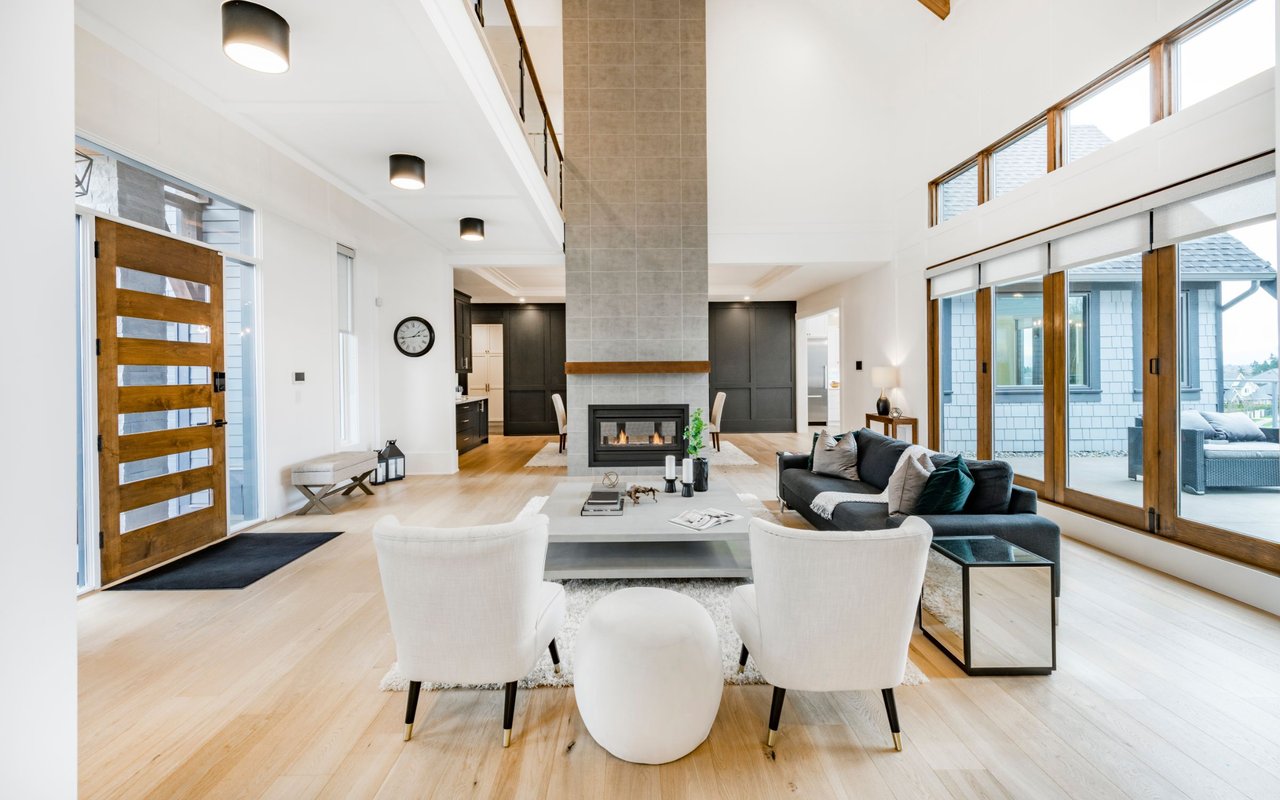
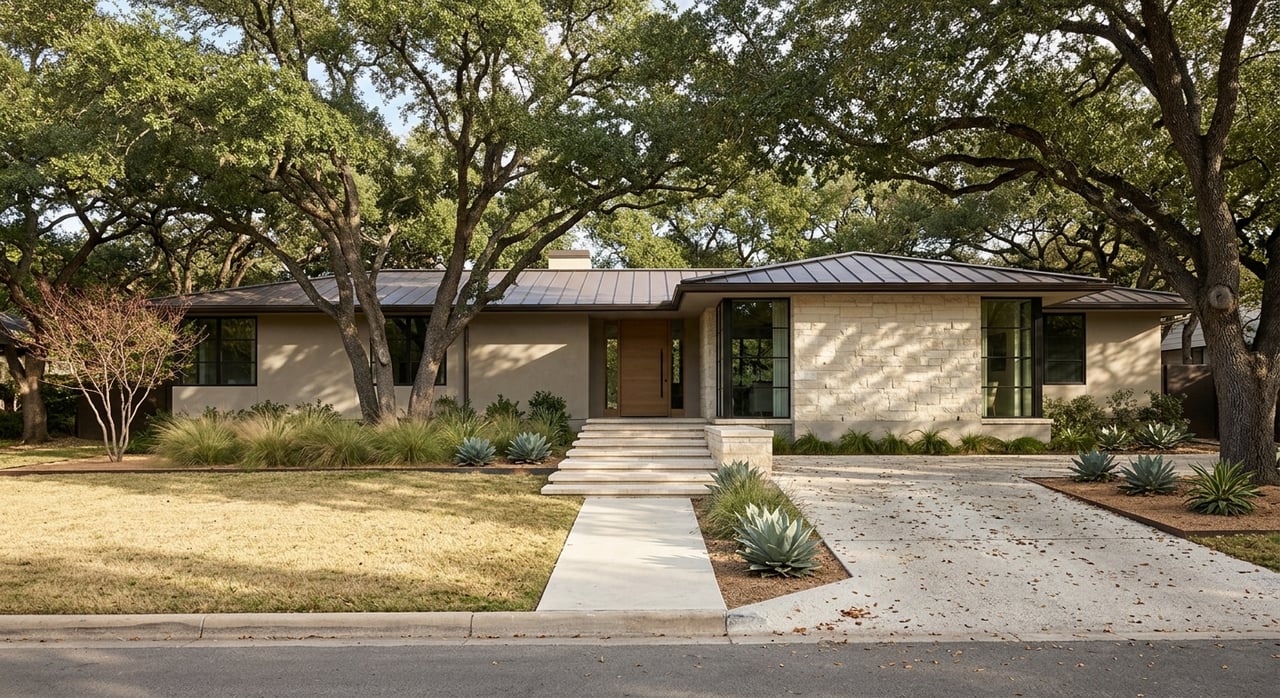
- Newer custom homes that often rely on proportion, siting, and landscape sensitivity rather than showy scale
The result is a neighborhood that feels collected over time. Instead of one dominant look, Tarrytown offers a study in how architecture evolves while still maintaining a recognizable residential character.
Trees Shape the Architecture
In Tarrytown, the landscape is not separate from the architecture. It is one of the main reasons homes look the way they do. The Central West Austin neighborhood plan reports tree canopy coverage of 51%, mostly live oaks and pecans, and notes that the urban forest is extensive, mature, and aging.
That matters because design decisions here often begin with the lot itself. Tree placement, root zones, and driveway access can influence a home’s footprint, orientation, and even construction sequencing. In a neighborhood with this much canopy, architecture often has to work around the landscape rather than erase it.
Why New Builds Often Feel Careful
Austin’s rules help explain why newer homes in Tarrytown often appear thoughtfully placed. The City Arborist program regulates trees on private property, including Protected Trees at 19 inches DBH and Heritage Trees at 24 inches DBH for qualifying species such as oaks. The city states that a Tree Ordinance Review Application may be required when a project removes a tree, prunes 25% or more of a canopy, or disturbs a critical root zone.
The city also says its Residential Design and Compatibility Standards were created to protect the character of older neighborhoods by keeping new construction, remodels, and additions compatible in scale and bulk. In practical terms, that often leads to new homes that feel more site-specific than oversized. You may notice selective glazing, controlled massing, and landscape plans that preserve mature trees and neighborhood scale.
Streets, Lots, and Neighborhood Form
Part of Tarrytown’s visual interest comes from its street pattern. The city neighborhood plan notes a mix of grid and winding streets, likely shaped by topography. That gives the neighborhood a more varied rhythm than areas built on a simple, repetitive layout.
For architecture lovers, that means the experience changes block by block. Some streets feel formal and orderly, while others feel softened by curves, grade changes, and tree cover. This variation helps homes sit differently on their lots and gives the neighborhood a more layered, less uniform visual character.
Historic Layers Still Matter
Tarrytown’s older homes are not shaped by market taste alone. Austin’s preservation framework can also influence what happens to certain properties. The city says it has more than 600 historic landmarks, 8 local historic districts, and 18 National Register historic districts, and the Historic Landmark Commission reviews proposed changes and demolitions or relocations of buildings that are at least 45 years old and may be eligible for landmark designation.
For a buyer or homeowner, that means some properties may come with added design and review considerations. In a neighborhood like Tarrytown, architecture is often part of a larger conversation about preservation, scale, and long-term neighborhood character.
Landmark Places That Explain Tarrytown
If you want to understand Tarrytown beyond individual houses, a few nearby public places offer useful context. These places show how architecture, gardens, landscape, and civic memory connect in this part of Austin.
Mayfield Park & Preserve
Mayfield Park & Preserve includes a cottage built between 1860 and 1880. The property later expanded as a family retreat in the early 20th century and is now known for its gardens, peacocks, and historic landscape character.
For architecture lovers, Mayfield helps explain why Tarrytown often feels rooted in land as much as in buildings. It is a reminder that this area’s identity is tied to estate patterns, gardens, and mature landscape features.
Laguna Gloria
Laguna Gloria centers on the Driscoll Villa, built in 1916, on a 14-acre lakeside site about five miles from downtown. Its wooded grounds and outdoor art are part of the experience, which makes it especially useful for understanding the relationship between architecture and setting.
If you appreciate houses that respond to site and scenery, Laguna Gloria offers a strong local reference point. It captures the blend of cultivated design and natural context that still helps define the area.
Deep Eddy Context
Just south of Tarrytown, Deep Eddy Pool adds another layer to the story. Austin says it is the oldest swimming pool in Texas, originating from a spring-fed swimming hole improved by A.J. Eilers, Sr. in 1915.
While it is not a residential site, it helps frame the broader historic landscape around Tarrytown. Together, Mayfield, Laguna Gloria, and Deep Eddy show why this area often feels like more than a set of residential blocks.
What Architecture Lovers Should Look For
When you explore Tarrytown, it helps to look past style labels and focus on how homes meet the land. The best observations usually come from noticing relationships rather than isolated details.
Here are a few things worth watching for:
- How a house sits beneath or around mature oaks
- Whether the facade feels symmetrical, informal, or adapted over time
- How setbacks, driveways, and entry paths respond to the lot
- Whether newer construction feels scaled to the street
- How brick, stone, siding, and glass are used across different eras
- Where gardens and landscape design act as part of the architectural composition
That lens makes Tarrytown especially interesting. It is not only about historic homes, and it is not only about new luxury construction. It is about how different generations of design share the same neighborhood framework.
Why This Matters for Buyers
If you are considering a home in Tarrytown, architectural character is more than a visual bonus. It can shape your experience of the property, your renovation options, and the long-term appeal of the home. Trees, compatibility standards, and possible preservation review can all affect what is feasible on a lot.
That is one reason design-aware buyers often look closely at siting, proportion, and landscape condition here. In a neighborhood where architecture and land are so closely connected, value is often tied to more than square footage. The right fit may come down to how well a home balances livability, context, and design integrity.
For buyers drawn to architecture-forward homes, custom builds, or carefully handled renovations, Tarrytown offers a compelling case study in central Austin living. It combines history, site sensitivity, and enduring residential character in a way that is increasingly hard to replicate.
If you want help understanding how Tarrytown’s architectural character translates into real buying opportunities, Kurb Group brings a design-aware, strategic approach to Austin real estate.
FAQs
What architectural styles are most associated with Tarrytown?
- Tarrytown is most often associated with Tudor Revival, Colonial Revival, bungalow and cottage forms, and mid-century homes, based on city records and neighborhood history.
Why do newer homes in Tarrytown often look carefully placed on the lot?
- Newer homes often respond to mature trees, compatibility standards, and city tree rules that can influence footprint, massing, and site planning.
Is Tarrytown only known for historic homes?
- No. Tarrytown is better understood as a mix of historic houses, estates, and newer construction that fits into an established neighborhood setting.
What public places help explain Tarrytown’s architectural character?
- Mayfield Park & Preserve, Laguna Gloria, and the nearby Deep Eddy area are useful places to understand the connection between architecture, landscape, and local history.
How old is most of Tarrytown’s housing stock?
- Much of Tarrytown was developed in phases from the late 1930s through the 1950s, according to the City of Austin neighborhood plan.